
You’d expect a buyer’s agent to say yes. So let me start with the times the answer is no.
A buyer’s agent is not worth it if you have the time and the appetite to do the work yourself. There’s no secret licence for buying property. I taught myself: a few years of weekends, a couple of mistakes that cost real money, and a long stretch of learning to tell a genuine growth suburb from a nice brochure. If you’re single, obsessed, and happy to spend your next two years doing that apprenticeship, you genuinely don’t need me. If you want a head start on the DIY route, open a free account on Zapiio, the portfolio modelling tool we use in our own strategy sessions, and run your numbers yourself.
It’s also not worth it if the fee is your deciding factor. If you’re shopping on price, there are cheaper agents out there and one of them will happily take you on. No hard feelings.
Now the other side.
What you’re actually paying for
The fee doesn’t buy house-hunting. You can scroll listings in bed like everyone else. It buys four things that are hard to fake:
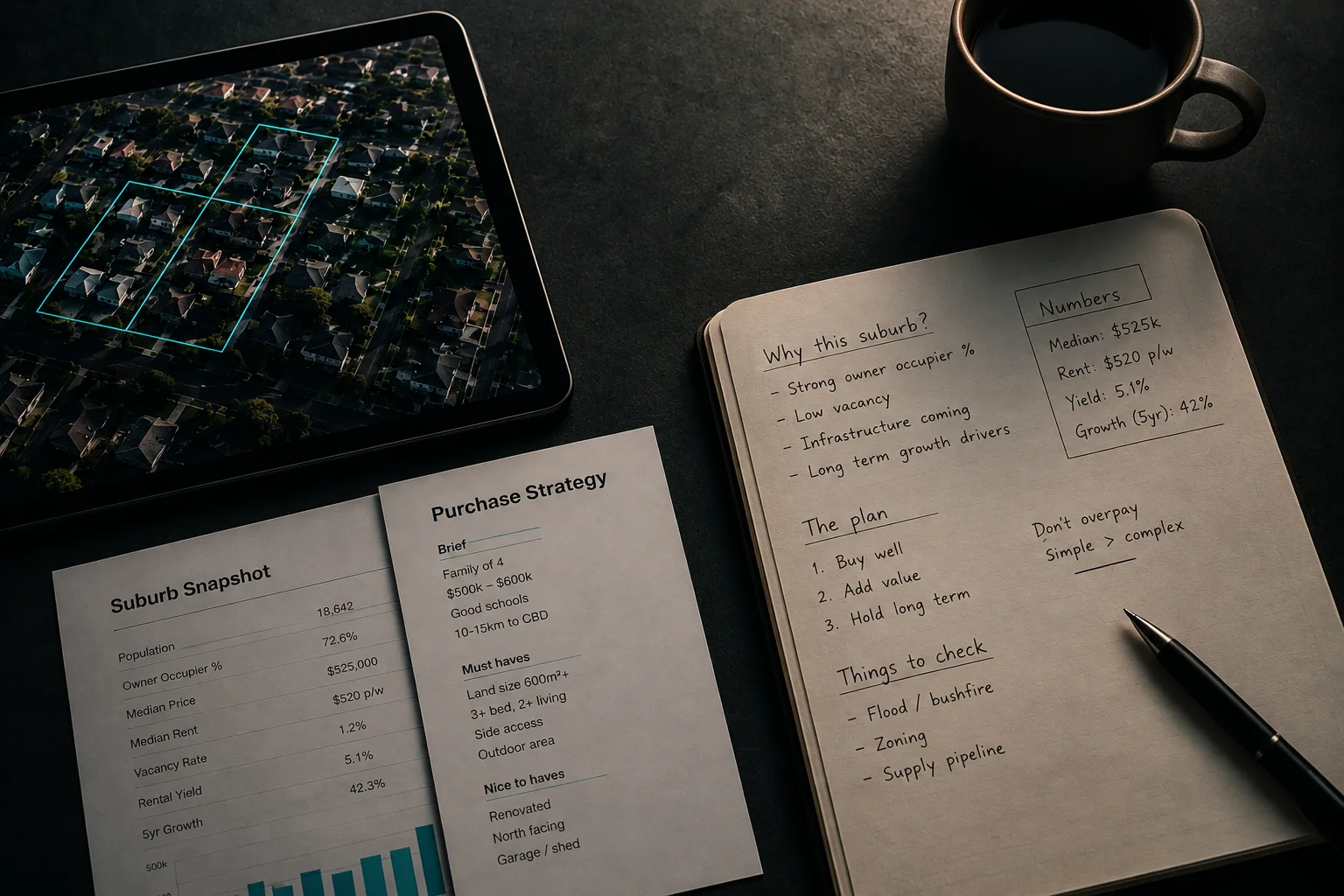
Market selection before property selection. Most people fall in love with a house and reverse-engineer a reason to buy it. The whole game is the opposite: pick the market first, off the economics. Our searches start with all 15,000 suburbs in Australia and screen them on jobs, population, supply, incomes and what’s being built that isn’t housing. Most suburbs fail. You buy in the handful that don’t.
Access. The best buys often never hit the internet. Agents send stock first to the people who buy every week and settle without drama. That’s a relationship you can’t build in one purchase.
A number to walk away at. Every serious contender gets a comparable sales analysis, so the offer is built from what actually sold nearby, not from what the listing agent reckons. And because we’re not in love with the house, we’ll actually walk at that number. The emotional premium people pay at auction, because they’d already mentally moved the tenant in, is regularly bigger than any fee.
The boring saves. Building and pest, flood and bushfire overlays, easements, zoning. Nobody brags about the lemon they didn’t buy, but the lemon you didn’t buy is where a chunk of the value lives.
The honest maths
A good buy is not “a nice house at a fair price”. It’s the right suburb at the right time at or under comparable value. Get the suburb wrong and no negotiation saves you: the difference between a suburb that compounds and one that goes sideways is easily six figures over a ten year hold. Get the auction wrong once and you can overpay by more than most fees in an afternoon.
Against that, a flat fee is small. Ours is $20,000, flat, same at every budget, with $5,500 when you sign on and the rest only when your purchase goes unconditional. If we never secure you anything, the balance never gets billed. Plenty of agencies size the fee to your budget instead, a percentage on some, a tier ladder on others. I’d encourage you to think hard about the incentives that creates.
The three pitches you’ll hear
Start shopping for help and a few lines come up again and again. Worth knowing what each one actually means.
“Our fee depends on your purchase price.” Percentage or tiers, same maths: the more you spend, the more they make. Have a guess whether they’ll ever talk you down to a cheaper property.
“This suburb’s about to boom. Get in before everyone else.” Said to 200 other people the same week, usually because a developer is paying them per sale. That’s not advice, that’s distribution.
“Trust me, I’ve got a feel for this market.” A feel. No workings, no sold data, no filter. You wouldn’t accept “trust me” from a sparkie about your switchboard. Same rule here.
Questions to ask any buyer’s agent, including me
- Have you bought investment properties with your own money? Not managed, not advised on. Bought. You’d be amazed how many haven’t.
- How do you get paid, exactly? Flat, tiered or percentage, and does it grow with your budget? On anything they recommend, ask who’s paying them for it and make them say it plainly.
- Show me the workings. Ask to see the actual data behind a suburb call and a comparable sales analysis from a real purchase. “Trust me, I’ve got a feel for the market” is not workings.
- How many clients do you run at once? We cap it at 5 so nothing gets rushed and nobody gets handed to a junior. Whatever the number, make sure it comes with a reason.
- What happened after the purchase? Real results with real numbers, not star ratings. Here are ours.
The short version
Worth it if your time is worth more than the apprenticeship, if you want the suburb picked off sold data instead of a hunch, and if one avoided mistake covers the fee, which it usually does. Not worth it if you’ll do the work yourself, or if the invoice matters more to you than the outcome.
If you’re still not sure which camp you’re in, that’s exactly what the free 15 minute call is for. Worst case, I’ll tell you you don’t need me. It’s happened before.