
Victoria quietly changed the granny flat game, and most property owners still haven’t noticed.
Under the state’s small second dwelling rules, you can generally build a second dwelling of up to 60 square metres in your backyard without a planning permit, as long as your lot is over 300 square metres. And the change that actually matters most: you can rent it to anyone. The old “dependent person’s unit” days, where the flat legally had to house your nan and had to be removed when she moved out, are gone.
That combination, no planning permit plus rent-to-anyone, is why granny flats went from a fringe idea to one of the most asked-about strategies on my calls.
The rules, without the jargon
Here’s the practical version of what applies to a small second dwelling in Victoria:
- No planning permit needed in most cases, provided the dwelling is 60 square metres or under and the lot is over 300 square metres
- A building permit is always required. No exceptions. A decent builder arranges this for you
- Rentable to anyone. No family-only restriction, no removal condition
- It has to meet standards: 7-star energy rating under the current building code, and Victorian rental minimum standards if you’re leasing it
- One catch worth knowing: planning overlays can still drag a permit back into the picture. Flood overlays, bushfire overlays, heritage controls, that sort of thing. “Generally no permit” is not “never a permit”
That last point is where most of the DIY research falls over. The rules are state-wide, but your block is not. Setbacks, easements, where the sewer runs, how the services connect, whether an overlay touches your title. Every one of those can change the answer.
What the numbers look like
Talk is cheap, so here are the numbers we actually work with. A quality two bedroom, 50 square metre build like the Goulburn 50 lands around the $200k mark built, turnkey. Depending on the market it sits in, that rents from about $450 a week.
Run that maths. Roughly $23,000 a year in rent on a $200k build is a gross yield north of 11 percent on the money spent, on land you already own. The build also typically adds more value than it costs in the right market, which is manufactured equity you can borrow against for the next move.
Before you get excited: that’s the right block in the right market. In the wrong market, a granny flat is an expensive shed with a kitchenette. Rental demand for small dwellings has to actually exist where you are, and the value uplift has to show in local sold data, not in a sales brochure.
How to check your own block
Two ways, and I’d do both.
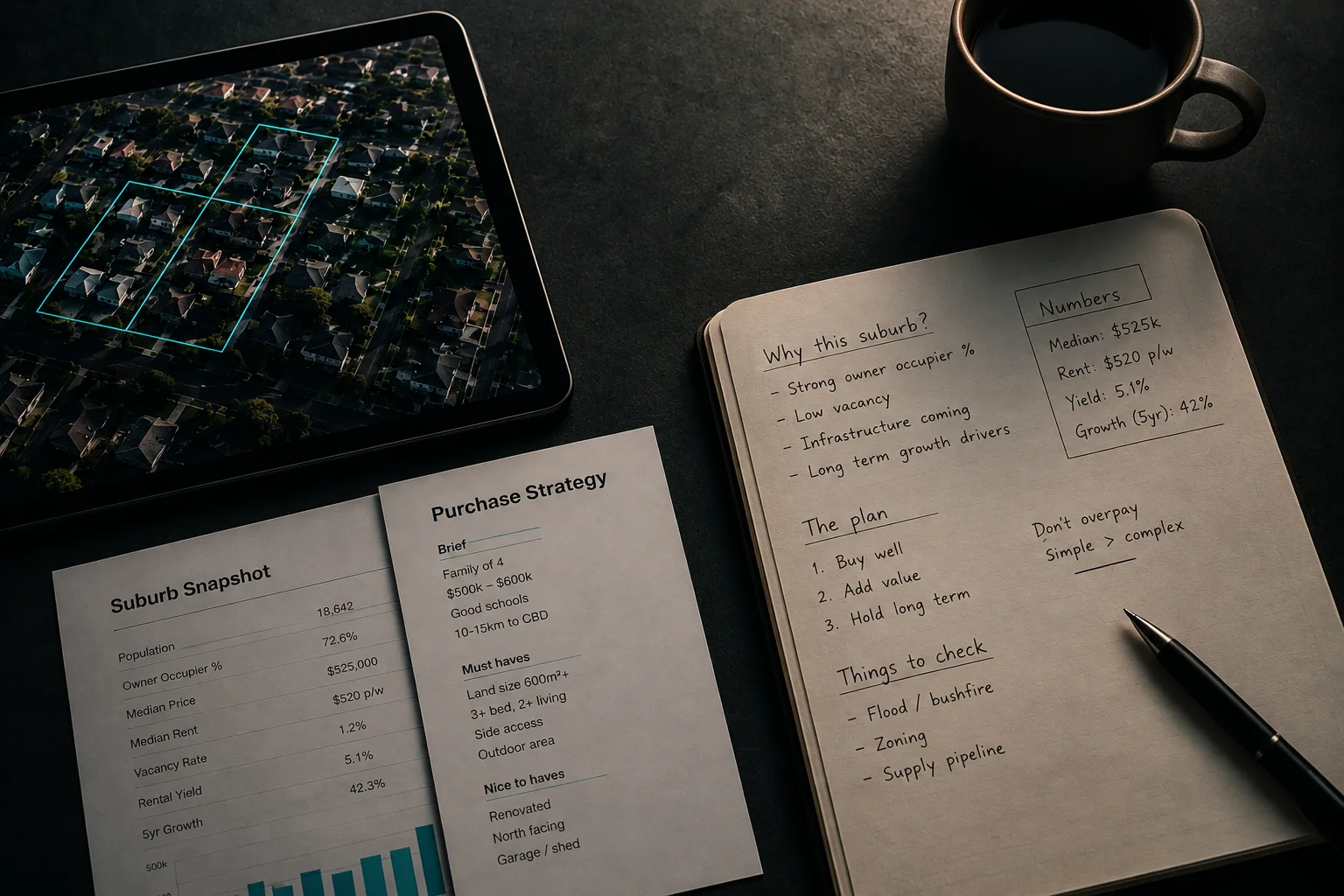
First, the free 30 second version: punch your address into our feasibility analyser, trace your block on the aerial, and it will check lot size, setbacks and coverage against indicative state rules. It’s a screening tool, not planning advice, but it kills non-starters fast.
Second, the proper version: request a feasibility assessment and we’ll look at your actual site. Council rules for your address, realistic rent for a second dwelling on your street, build cost against the value it adds, and the honest question most people skip: whether that money would work harder in your next purchase instead.
If the numbers say don’t build, we’ll tell you don’t build. That answer is free too.
This article is general information, not planning or financial advice. Rules change and every site is different. Confirm anything that matters against the current planning scheme and your own title before spending money.